
In this article
A company can spend millions to fund a lobbying campaign and never disclose it publicly. This is not a loophole. This is how the system of trade associations and business coalitions works.
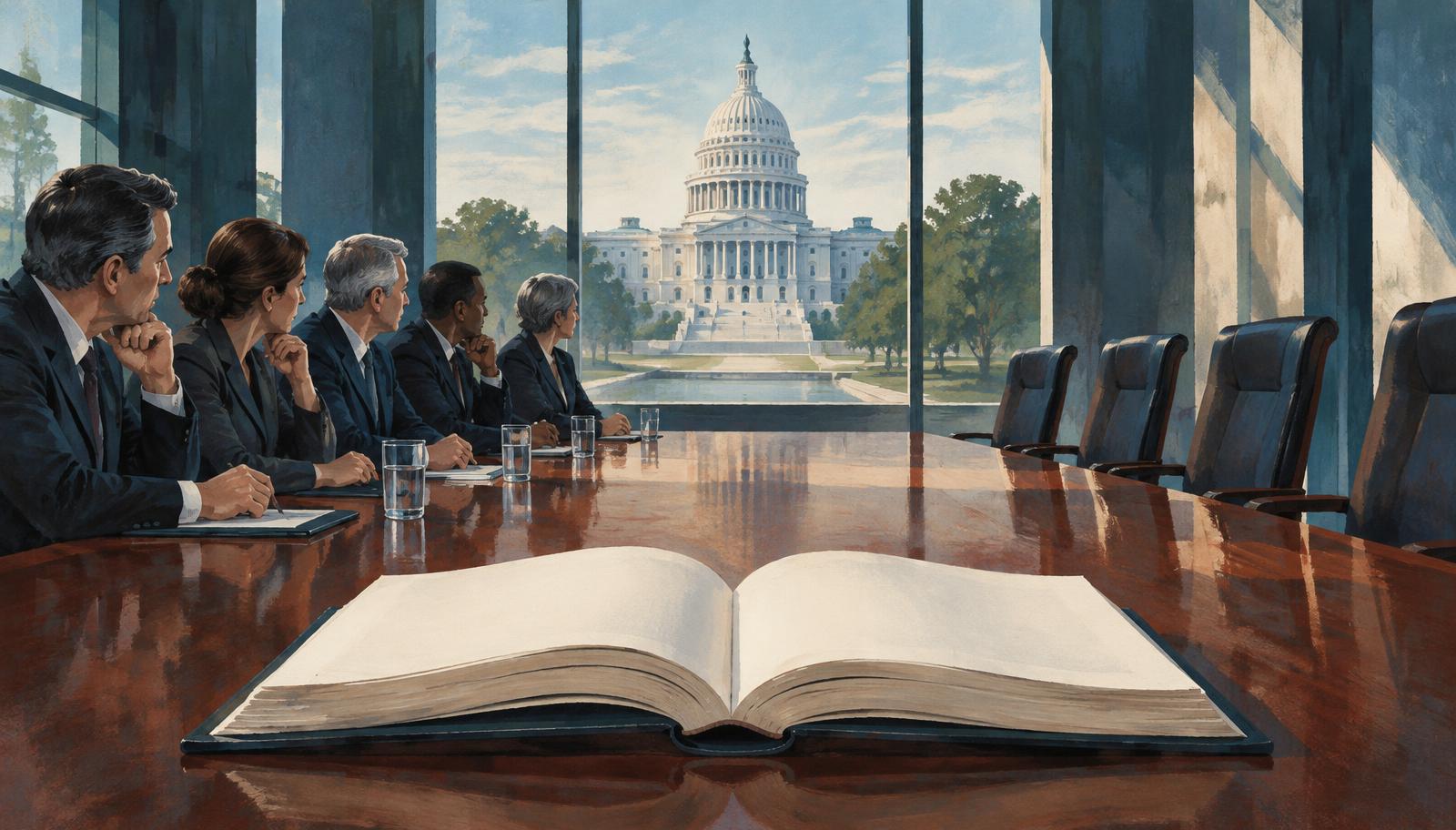
When people think about corporate influence in American politics, they usually picture individual companies such as a Big Oil giant or a major bank, lobbying for their own interests. However, there is a less visible side to this story. Much of corporate America's political power runs through trade associations and business coalitions that represent entire industries, or the business community as a whole, making them a far stronger lobbying force than any single company acting alone.
Introduction
“Much of corporate America's political power runs through trade associations and business coalitions that represent entire industries, or the business community as a whole, making them a far stronger lobbying force than any single company acting alone.”
The most well-known is the U.S. Chamber of Commerce, the largest business lobbying organization in the country, representing millions of businesses of every size and sector. The Business Roundtable is a smaller but more elite organization. It is made up of the CEOs of nearly 200 of the largest U.S. companies, giving its members direct access to the highest levels of government. Alongside these general-purpose groups sit hundreds of industry-specific organizations, the National Association of Manufacturers, the American Bankers Association, the American Chemistry Council, each built to represent the narrower interests of one sector.
These organizations exist, on paper, to give businesses a collective and unified voice by pooling resources, coordinating strategy, and speaking with more weight than any one company could alone. At the same time, this structure lets individual companies stay out of the spotlight. A corporation can quietly fund and direct its trade association's lobbying without ever putting its own name on a public statement, thus outsourcing the political risk and the public accountability that comes with taking a position. It is a pattern with a long history, as trade associations have played central roles in past fights over tobacco regulation, pollution rules, and climate policy, often shielding member companies from direct scrutiny.
“A corporation can quietly fund and direct its trade association's lobbying without ever putting its own name on a public statement, thus outsourcing the political risk and the public accountability that comes with taking a position.”
Praising Publicly while Complaining Privately
The role of business industries and associations matters more than ever in moments when government action raises real questions about democratic norms. One pattern has become especially visible during the second Trump administration: businesses refrain from criticizing the administration's policies publicly, preferring to praise, while complaining privately to avoid being targeted.
“Businesses refrain from criticizing the administration's policies publicly, preferring to praise, while complaining privately to avoid being targeted.”

Take the example of tariffs. At the Yale Chief Executive Leadership Institute's CEO forum, 66% of surveyed CEOs said tariffs had already harmed their businesses, and Yale's Jeffrey Sonnenfeld and Stephen Henriques have reported that, in private, CEOs describe the tariffs as undermining a system that has long benefited the U.S. economy for the sake of short-term political wins.
Publicly, though, the response has been far more measured. The Business Roundtable's statement on the issue read, in part, that it supported the administration's goal of "restoring balance in America's trading relationships" while noting only that "persistent high tariff rates will harm the U.S. economy," a far cry from the direct alarm CEOs voiced behind closed doors. The National Association of Manufacturers (NAM) followed a similar script. When Trump imposed tariffs on Canada, Mexico, and China, NAM CEO Jay Timmons acknowledged that "small and medium-sized manufacturers" would face "significant disruptions," while still opening with support for the administration's goal of confronting drug trafficking at the border.
“Praise is public and enthusiastic, while criticism, when it happens at all, is private, hedged, or buried inside a statement that leads with something complimentary.”
Why Silence is a Problem for American Democracy
Corporate silence is not just a communications strategy. It has direct consequences for democratic accountability because silence is a signal of appeasement of government overreach.

“When no single company wants to be the first to speak out, and umbrella organizations avoid taking clear public stands, government action goes unchecked by one of the traditional counterweights in American civic life.”
The cumulative effect of engaging in widespread caution is that a president gains more leverage over American business than would otherwise exist. When no single company wants to be the first to speak out, and organizations avoid taking clear public stands, government action goes unchecked by one of the traditional counterweights in American civic life. The more frequent it is that businesses treat any public position as inherently risky, the smaller the opportunity for accountability gets. For a fuller picture of how this fits a broader pattern of democratic erosion, see The Authoritarian Playbook.
What This Means for the Average American
Corporations built and grew in a democratic system that depends on the rule of law and freedom from political interference in the economy. We believe that defending that system, not just quietly, but visibly, is part of the responsibilities businesses should hold. When businesses default to public praise and private grumbling, they leave the public with less information about where corporate America actually stands, and less basis for holding any individual company accountable for its choices.
“Visibility is the first step towards accountability.”
If you want to see how a specific company's public statements stack up against its actions, or you have information about a company's behavior that deserves a closer look, that is exactly the kind of gap we are working to close. Explore the Spend4Democracy app to check where the companies you support actually stand, read how consumer spending shapes political power, or browse more of our analysis on corporate power and democracy.
Sources
- 01Fortune. CEOs despise Trump's tariffs but remain silent
- 02NOTUS. Business Roundtable, Donald Trump, Lobbying, Funding, Grants
- 03Politico. American Bar Association sues Trump over executive order
- 04Business Roundtable. Statement on tariffs and U.S. trade policy
- 05National Association of Manufacturers. Manufacturers on Executive Orders to Impose Tariffs