
In this article
Buying groceries and clothes. Picking a streaming service. Choosing one ride-share app over another. These feel like small, private decisions hardly making an impact beyond your own household budget. Yet in the large-scale market economy of the United States, consumer spending makes up roughly two-thirds of GDP, meaning all those small decisions add up to something much bigger. Your dollars spent on everyday purchases decide which companies grow, which industries dominate, and ultimately, who holds corporate power.
Like a drop of water in a pond, a single drop does not seem to make a difference; but on an aggregate scale, millions of them repeated every day do alter the water level of the pond. The same holds for our dollars spent in the economy. Collectively, consumer spending helps write the story of which corporations become powerful enough to shape public life, and which do not.
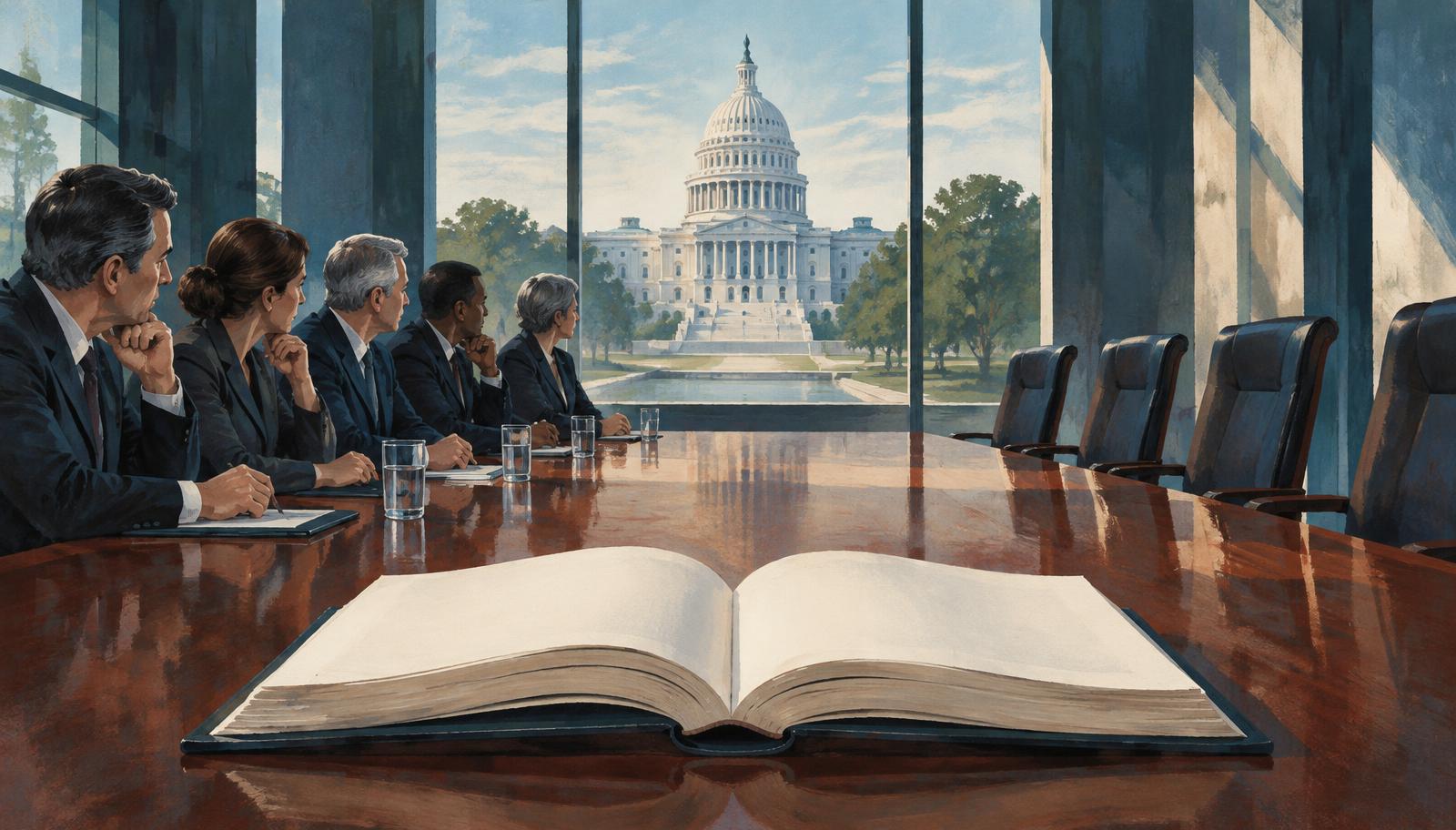
The growing power of companies in the United States has become harder to ignore since Donald Trump's return to office in January 2025. Several major corporations and billionaires have moved closer to the administration through large inaugural donations, policy reversals, and quietly rolled-back diversity commitments or loosened content moderation to stay in the administration's good graces. This raises the question: when we spend our money on a company, what kind of political power are we helping to build?
This article argues that consumer spending is a political act whether we treat it that way or not. Understanding where our money goes is the first step toward either fueling democratic decline or upholding democracy.
What Consumer Spending Has to Do With Political Power
Economists describe consumer spending as simply household expenditure on goods and services, from groceries to streaming subscriptions. Yet there is a deeper, less obvious way of understanding consumer spending beyond buying a product. Every time you buy something, you are allocating resources to a company in the form of revenue, market share, and consumer data.
“Every time you buy something, you are allocating resources to a company in the form of revenue, market share, and consumer data.”
Political scientists have a name for this: political consumerism. Researchers Dietlind Stolle and Michele Micheletti describe it as the many ways citizens use the marketplace itself as an arena for politics, through organizing boycotts, "buycotts," ethical purchasing, and deliberate refusal to support certain companies. There is a limit to political consumerism: "voting with your wallet" has a catch that voting at the ballot box doesn't. Democratic voting is based on one person, one vote. Markets, as economist Joseph Stiglitz has described, run on money.
As a result, American politics increasingly looks like "one dollar, one vote" rather than "one person, one vote," as rising inequality and corporate lobbying allow economic power to translate into political power.

“American politics increasingly looks like "one dollar, one vote" rather than "one person, one vote."”
This creates a wealth gap in consumer choice itself. Wealthier consumers can afford to shop according to their values. Lower-income consumers, who may care just as much, often can't afford pricier or more sustainable alternatives, so they are stuck buying the cheapest options, whether or not those choices align with what they believe. This dynamic often ends up reinforcing companies like Amazon, which depend on low-wage labor to keep prices low in the first place, creating a vicious loop.
So while consumer spending is not a form of democratic participation in the formal sense, it is deeply relevant to who holds monetary power and, by extension, political power. This does not mean that you as an individual are personally responsible for every decision a company makes. Most of us do not have the time or resources to investigate every brand we buy from. Yet our collective buying habits help determine which corporations grow powerful enough to shape public life in the first place.
Why Corporate Transparency Matters
If our spending really does shape political power, then knowing how a company behaves, beyond its marketing, becomes essential. Corporate transparency is what turns "voting with your wallet" from a slogan into something you can actually do. Without a clear picture of who a company is donating to, how it lobbies, and how it responds to political pressure, even well-intentioned consumers are effectively voting blind.
Transparency is not just about scandal or corruption. It is about giving citizens a chance to see the political footprint behind the products they use every day. When that footprint is visible, companies have a stronger incentive to align their public conduct with their stated values. When it is hidden, quiet capitulation becomes easy.
Why This Moment Matters
The second Trump administration has thrown the role of corporate money into the spotlight. His 2025 inauguration raised a record-breaking sum, with major contributions from companies across tech, finance, energy, crypto, retail, and manufacturing. Many of these companies were facing significant pending business deals or investigations with the very government they were donating to.
This in itself is not illegal, companies have long donated to inaugurations across party lines. What makes the second Trump administration's influence on corporations distinctive is the scale and timing. When corporations pour money into an administration that controls antitrust enforcement, federal contracts, tariffs, and tax policy, the concern is not partisanship but access, access to an administration shaping policy decisions, investigations, or contracts.

The danger is not that a company holds a political opinion, but that a handful of corporations can use consumer-funded profits to build political relationships the rest of us cannot match or overpower.
Current Examples of Companies Capitulating to Government Pressure
Meta (Facebook, Instagram, WhatsApp, Threads)
One of the most prominent examples came in January 2025, just before Trump's second inauguration, when Meta ended its US third-party fact-checking program in favor of a community-notes model while loosening restrictions around hot-button topics like immigration and gender identity. News outlets called it one of the biggest overhauls of Meta's political content policy in years.
This is not just any product update. Facebook, Instagram, WhatsApp, and Threads are where huge numbers of people encounter news, political messaging, and public debate. Healthy democratic deliberation depends on a shared information environment people can actually trust. When a platform that size loosens its safeguards against misinformation, the ripple effects go beyond user experience, reaching elections, public trust, and the way we talk to each other.
Supporters of the changes frame Meta's move as a win for free expression. Free speech is vital, but so is an information environment that is not drowning in falsehoods and algorithmically amplified outrage. When platform rules shift to appease an incoming administration, alarm bells should be ringing.
“You can control where you give your attention, data, and ad dollars, and help fund and legitimize the platforms shaping political debate.”
For everyday users, the takeaway is not necessarily "delete your accounts." It is that you can control where you give your attention, data, and ad dollars, all of which help fund and legitimize the platforms shaping political debate.
Diversity, Equity, and Inclusion (DEI) Policies
A second example is the rapid corporate retreat from diversity, equity, and inclusion programs after Trump returned to office. In January 2025, he signed an executive order targeting DEI in the federal government and pushing the private sector to follow suit. Within weeks, a wave of major companies scaled back, rebranded, or scrapped their DEI programs altogether.
DEI is a genuinely contested policy area, and not every program was equally effective. However, the democratic stakes are bigger than any one program: democracy depends on equal citizenship and institutions that do not simply reinforce existing hierarchies of power. When companies abandon inclusion commitments the moment political pressure shows up, it suggests those commitments were more branding than belief.
“When companies abandon inclusion commitments the moment political pressure shows up, it suggests those commitments were more branding than belief.”
No amount of consumer awareness can replace civil rights law or labor protections, but paying attention to which companies hold the line and which fold at the first sign of political pressure is part of how consumers can hold corporations accountable to the values they claim.
What Can You Actually Do About It?
Here is the honest truth: as an individual, you are not going to bring down Amazon by halting all shopping. For a huge number of people, avoiding the giants, Amazon, Google, Meta, Apple, Walmart, is not realistic because they are woven too deeply into how we live and are often the only options. Instead, make your spending intentional rather than automatic, and pair it with the information to back it up.
“Make your spending intentional instead of automatic, and pair it with the information to back it up.”
This starts with knowing what you are actually supporting. Which companies donated heavily to the 2025 inauguration and then saw their regulatory troubles quietly disappear? Which ones rolled back DEI the moment it became politically convenient, and which held firm? Which corporations have used lobbying and legal pressure to push back against government overreach, and which caved without a fight?
This is exactly the gap The Democracy Domain exists to fill. Our team tracks how Fortune 500 companies and other major players are acting in relation to democratic norms, the rule of law, press freedom, anti-corruption, and economic fairness, in the Trump era. We build this research into a public, searchable record so you do not have to do the investigative work yourself. You can check the democracy score of any company and read about the politically-related events tied to it. If you want the deeper context on how those norms are being tested, read The Authoritarian Playbook.
So here is what you can do to protect democracy daily using your dollars:
Check before you commit. Before signing up for a new subscription or making a big purchase, take two minutes to see how that company has actually behaved, not just what its ads say.
Redirect where you can. Local businesses, independent media, unionized workplaces, and companies with real track records on democratic accountability deserve your dollars more than the ones quietly currying favor with whoever is in power.
Support the watchdogs. Investigative journalism and accountability research, including the work we do, only survive because people choose to fund them. That is a form of spending too.
Talk about it. Political consumerism only works at scale. Tell a friend why you switched banks, cancelled a subscription, or started reading a different news source. Awareness spreads the same way spending power does: one person at a time, adding up to something real.
None of this replaces voting, organizing, or holding elected officials accountable. But your spending is already casting a vote every single day, whether you are paying attention or not. The only real choice is whether you make it a conscious one.
Conclusion
Consumer spending is one of democracy's hidden battlegrounds. It shapes which companies grow, which platforms dominate our conversations, and which corporations become powerful enough to shape government itself. In the Trump era, that dynamic has only become more urgent, as corporations donate heavily to political events and cozy up to an administration that controls the regulatory levers over their own business.

Your spending cannot fix all of that on its own, but it is not nothing. Every dollar you direct either toward a company or away from one helps decide which institutions grow strong enough to shape the world the rest of us live in. Democracy is not only built at the ballot box. It is built, or eroded, in the everyday economic choices we barely stop to think about.
Before your next purchase, take two minutes to check the company behind it. Open the Spend4Democracy app, look up a brand's democracy score, read the events tied to it, and redirect your dollars accordingly. That two-minute habit, repeated by enough of us, is how consumer power starts pushing back.
Sources
- 01U.S. Bureau of Economic Analysis. Personal Consumption Expenditures share of GDP
- 02Annual Review of Political Science. Political Consumerism: Stolle & Micheletti
- 03Joseph Stiglitz. The Price of Inequality: How Today's Divided Society Endangers Our Future
- 04The New York Times. Corporate donors and the 2025 presidential inauguration (January 2025)
- 05Meta Newsroom. More Speech and Fewer Mistakes: Mark Zuckerberg on content policy changes (January 2025)
- 06The White House. Executive Order: Ending Illegal Discrimination and Restoring Merit-Based Opportunity (January 2025)
- 07Reuters. Companies scale back DEI programs after Trump executive order (February 2025)